
 By
By 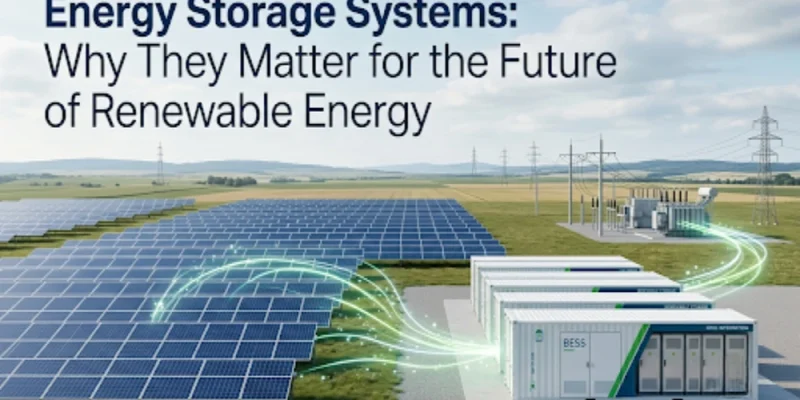
Energy storage isn’t a new concept, but the pace at which it’s scaling in India right now is genuinely remarkable. India added 7.9 GWh of battery energy storage capacity in the first half of 2026 alone, pushing cumulative operational capacity to 8.5 GWh, up more than elevenfold from just a year earlier. As solar and wind continue expanding across the country, energy storage systems have quietly become one of the most important pieces of the entire renewable puzzle.
Why Storage Matters So Much for Renewables
Both solar and wind are intermittent by nature. A cloud passing overhead or a sudden shift in wind speed can change output within minutes, and that unpredictability creates real challenges for grid operators trying to balance supply and demand. This is where a commercial battery energy storage system earns its keep, smoothing out these fluctuations rather than letting them ripple through the grid.
Ramp Rate Control and Output Smoothing
When power output changes sharply within a short window, it’s called a ramp event, and unmanaged ramps can strain grid infrastructure. Storage systems absorb or release energy to slow down these swings, keeping generation within a more predictable, manageable range.
Peak Shaving
India’s power demand typically spikes during specific hours, generally mid-morning and again in the evening. Rather than scrambling to bring extra generation online during these windows, renewable plants paired with storage can simply draw from their batteries. This is called peak shaving, and it helps both generators and consumers avoid paying higher tariffs during peak demand periods.
Frequency and Grid Stability
Storage systems also help maintain grid frequency and power quality by absorbing or releasing power in short bursts as conditions shift. This becomes increasingly important as renewable energy makes up a larger share of the overall power mix, since maintaining grid stability gets harder without some form of buffer.
Where Policy Is Heading
The government has clearly recognised this shift. Distribution companies are now required to progressively source a growing share of their power from storage-backed contracts, starting at 1 percent and rising to 4 percent by 2029-30, with some states like Rajasthan moving even faster. A viability gap funding scheme approved in 2026 is supporting 30 GWh of new battery storage capacity, alongside incentives for domestic battery manufacturing. Regulations around deviation settlement have also pushed generators toward adopting storage to avoid penalties for forecasting errors, making energy storage systems less of an optional add-on and more of an operational necessity.
As India’s storage sector scales rapidly toward the coming decade, having a dependable manufacturing partner matters. Waaree, India’s largest solar panel manufacturer with over 25.8 GW in manufacturing capacity, continues to expand its footprint in battery and energy storage solutions, supporting the broader shift toward a more stable, renewable-powered grid.













Comments