
 By
By 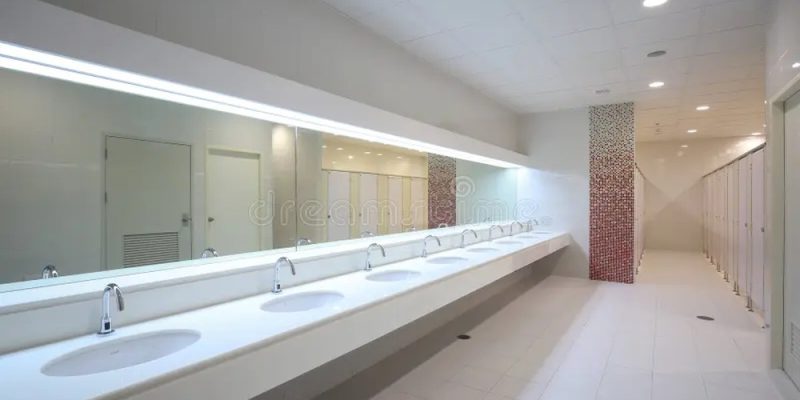
Educational facility restroom partitions are subjected to usage patterns and behavioral stresses that exceed those of most commercial environments. High school and university populations generate vandalism rates, graffiti incidents, and physical abuse events that require partition systems specifically designed and rated for institutional service.
Facilities managers at large secondary and post-secondary institutions report that partition replacement costs represent a significant recurring capital expenditure driven primarily by vandalism damage rather than normal wear. Upgrading material specifications from standard commercial to institutional grade at initial installation typically reduces replacement frequency substantially enough to justify the higher initial cost.
What Graffiti-Resistance Features Are Available in Partition Systems
Solid plastic (HDPE) and phenolic solid core panels, which have color integral to the panel core, allow minor graffiti to be removed from the surface without revealing a contrasting base layer. Powder-coated steel and plastic laminate panels, in contrast, reveal the substrate when graffiti is aggressively removed, creating a permanently compromised appearance that accelerates replacement decisions.
Gloss surface finishes are substantially more graffiti-resistant than matte finishes because the surface energy of glossy finishes resists marker and paint adhesion. Facilities that specify gloss finishes in educational restrooms report lower graffiti remediation costs than those using matte alternatives.
How Vandal-Resistant Hardware Extends System Service Life
Partition hardware including hinges, latches, and coat hooks is frequently the first component to fail under deliberate abuse conditions in educational facilities. Specifying stainless steel hardware with tamper-resistant fasteners from a manufacturer with dedicated institutional products, such as phenolic restroom partitions, reduces hardware failure rates and extends the service life of the entire partition system because hardware degradation often triggers cosmetic damage that accelerates the decision to replace panels that might otherwise serve for many additional years.
How Restroom Monitoring Technology Supplements Partition Durability
Occupancy monitoring systems deployed in educational restrooms provide data on usage frequency and duration that helps facilities teams identify high-vandalism-risk periods and locations. Correlation between monitoring data and maintenance records allows targeted supervision resources to be deployed more effectively than blanket patrol approaches.
Why Repair Part Availability Matters for Educational Facility Planning
Educational facilities benefit significantly from partition manufacturers who maintain current replacement parts for products 15 or more years after initial installation. The ability to replace individual damaged panels without full system replacement dramatically extends the effective service life of partition systems in institutional environments.
Educational facility partition specifications require material and hardware selections that reflect the institutional service conditions these environments create. The performance gap between commercial-grade and institutional-grade specifications is most clearly demonstrated in educational restrooms, where the consequences of under-specifying manifest rapidly and are costly to correct.







Comments